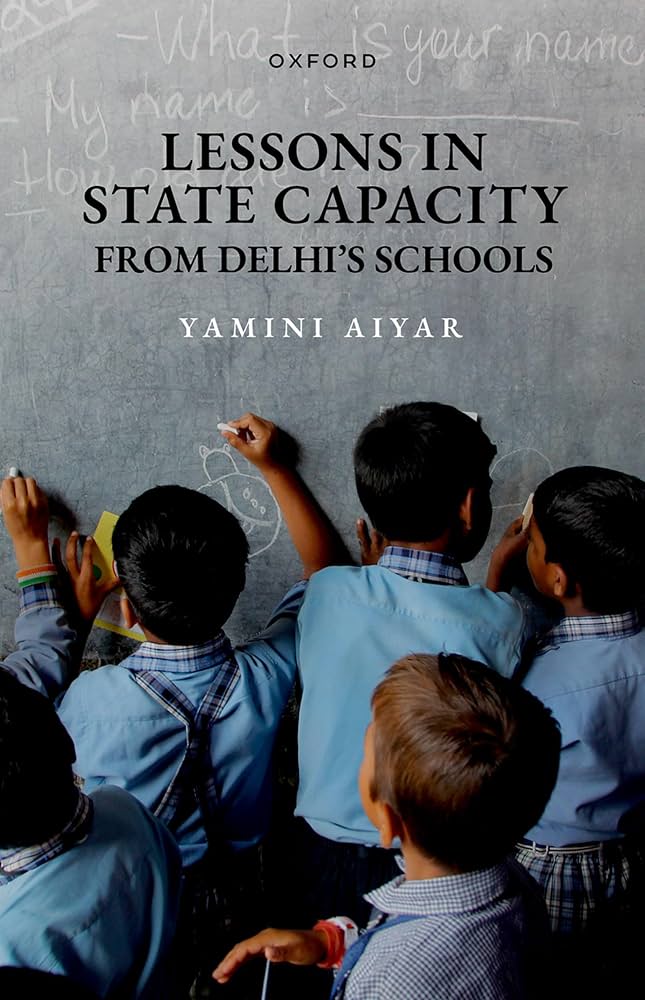
What will it take to build high-performing, purpose oriented public sector organizations in India?
The voices of India’s frontline bureaucrats—teachers, health workers, district and block level administrators – charged with delivering a vast array of public services to citizens—are dismissed all too quickly.
Public debates on the Indian state generally view them as corrupt, apathetic, incompetent and in urgent need of tighter monitoring and discipling. But is there another way to view their role, and thus reframe approaches to the challenge of building high-performing public sector organizations and improving State capacity in India?
To answer this question, Aiyar examines an ambitious effort to improve the quality of government schools, particularly their ability to equip students with foundational literacy and numeracy, in the city state of the National Capital Territory of Delhi. By training her focus on the voices at the frontlines of the public school system, she captures the complex ways in which bureaucratic hierarchies, processes and belief systems shape state capacity. The culture these create, determine how public sector organisations resist, distort and eventually adopt reform ideas and actions aimed at improving performance.
Building state capacity and infusing a sense of public purpose within state organisations, as Delhi’s schools teach us, is about nurturing rather than disciplining the frontlines. It is about breaking down sites of resistance by empowering the frontlines with agency and exposing them to the possibilities of change. Understanding, engaging and supporting the frontlines of the State, this book argues, lies at the heart of the challenge of building state capacity.